Free · answered by your team or by AI from your knowledge base
Take questions from your site without a dedicated agent
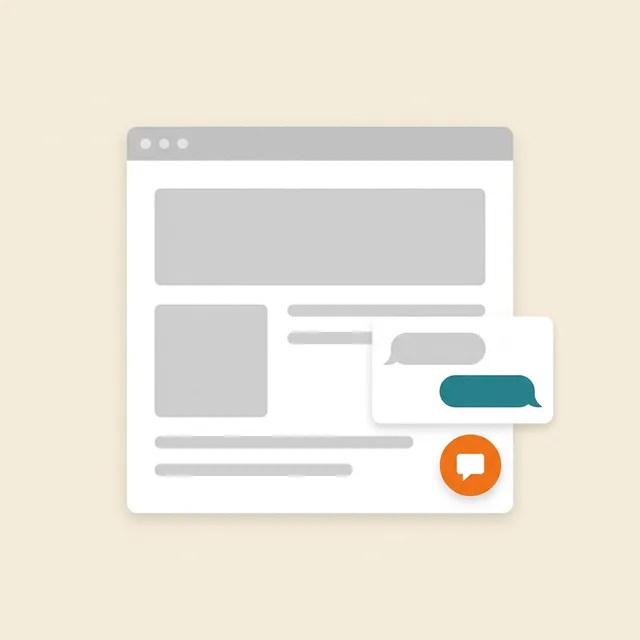
For websites where the team itself answers: a visitor types into the chat window on the page and staff get the conversation as its own channel in the Cenaly.com team chat — on a desktop and on a phone. When you need it, switch on the AI assistant: it answers from your knowledge base and hands the conversation to a human.
- Easier for a visitor to ask — no sign-up, no email
- Answer as a whole team, even with only a phone at hand
- AI assistant from your knowledge base — opt-in, humans answer by default
- No per-agent seats and no cap on conversations
No card · a minute to sign up, another for the tag · settings reach your site in 5 minutes
- per agent, per seat and per conversation — no staff or message limits
- $0
- languages of built-in labels; the widget reads your page language
- 45
- surfaces from one toggle: your website and your Cenaly.com storefront
- 2
- until an admin change reaches your site — that’s the CDN cache
- 5 min
How it works for the visitor
- 1
The visitor opens the chat
They tap the bubble in the bottom corner and see your greeting and a text field straight away. No sign-up, no email gate.
- 2
They ask right on the page
They write in their own words without moving to another service. The message arrives as its own channel in your Cenaly.com team chat.
- 3
They read the reply
The answer appears in the same window on your page. On your side it comes from any staff member with access to the conversation — admin, manager or owner.
- 4
They come back to the thread
Left and returned a day later from the same browser — the conversation and contact are still there: the thread is tied to a key pair in the visitor’s browser.
Set up in three steps
Sign up and add your site
A free Cenaly.com account and your site domain in the "My website" section.
Paste one tag
One line before </body> — in your theme, in a Tilda or Wix HTML block, in Shopify's theme.liquid. It serves every widget.
Switch widgets on in the admin
Each widget is a toggle and a settings form. Changes reach your site without touching code; CDN cache is five minutes.
The tag
<script src="https://cdn.cenaly.com/site/v1.js" data-domain="your-site.com" async></script>One tag for all widgets. `data-domain` is your site; everything else lives in the admin.
How chat helps visitors and your team
Answer as a team, including from a phone
A conversation opens as its own channel in the team chat. Any staff member with access can reply, and the staff app announces a new message with a push. No per-person licence to buy. Best for teams with no dedicated support desk.
Pick the conversation back up when the visitor returns
The widget recognises the visitor by a key pair in their browser: back a day later from the same browser, and the thread and contact are still there. Best for purchases nobody makes in one sitting.
Switch on the AI assistant when you are ready
Three modes: off, AI drafts the reply and a person sends it, or AI answers on its own and hands over to a human. It answers from your knowledge base and respects document access levels (only “may be shared externally” documents leave the building), with the persona and instructions you write, on a schedule and with a cap on answers per conversation. The autonomous mode takes a separate legal confirmation. Useful where questions repeat and nobody can be on duty around the clock.
Show help articles in a “Help” tab
If the location has published help articles, the visitor reads them right inside the chat window without leaving the page. Best where people look for instructions and answers to common questions.
Add a voice conversation to the same window
Switch on the web-call button when the location has telephony configured; the visitor needs HTTPS and microphone permission. The call engine loads as a separate file only on tap, so the button costs nothing until it is used. Best when explaining by voice is simply faster.
Set the look and the language of the labels
Colour, bubble position, greeting, title and button caption come from the admin, and you write your own texts per language. The widget reads the page language, ships built-in labels in 45 languages and renders inside a Shadow DOM, so your CSS can’t break it. Best for multilingual sites.
Collapse the buttons into one with the multi-button
When the multi-button is on, the separate chat bubble is hidden and chat lives inside its fan: one floating element on screen. Best for sites running several widgets at once.
Where it pays off
A question before buying
Size, stock, delivery time — asked on the product page instead of hunting for a phone number in the footer.
Pricing before the enquiry
On a service page the visitor can ask “how much would it cost in my case” before deciding to leave an enquiry.
Events and group bookings
Your manager answers about dates, deposits and menus in the team chat, including from the app on their phone.
Messages after hours
A visitor leaves a question in the evening. Staff reply when the next shift starts, and the thread stays in your account.
Instructions before asking
The visitor reads your published help articles in a tab of the same window, and asks a person only if the answer isn’t there.
A site builder without a CRM
On Tilda or Wix chat goes in with the shared tag. Website questions arrive in the Cenaly.com team chat, where your team replies.
How it looks on your site
Colour, position and labels adapt to your site. The widget lives in a Shadow DOM — your styles don't break it, and it doesn't break yours.
On desktop
On mobile
On your side: Those fields come from your chat settings, not from the page code: ask for a phone and the guest sees a phone field; do not ask, and they start typing right away.
On desktop
On mobile
On your side: A conversation from your own website goes into the same Chat section as conversations from the storefront: one queue, one history, answer from your phone.
On desktop
On mobile
On your side: The window does not pretend to be staffed: the guest sees “offline”, writes anyway, and the message waits for an operator in the same conversation.
Where it goes
Exact menu names and plan requirements, taken from each platform’s own help center.
Sites built with our website builder ship with the widgets already wired — nothing to paste.
Step-by-step guides per platform — in the help center →Build the chat for your site
Pick the button look and the first message — the widget appears in the corner of this page exactly as your visitors will see it. It is the real chat window, not a picture.
Step 3. Code for your site
<script src="https://cdn.cenaly.com/site/v1.js" data-domain="your-site.com" async></script>The code starts working after signup: the chat reads its look and texts from your account, not from the tag. Change the look — you never touch the site again.
The tag is only needed for your own website. With no site of your own — working on the Cenaly.com storefront or on a site generated in the dashboard — the chat is switched on with a toggle, nothing to paste.
Sign up with this chatThe settings travel to the setup wizard — right after signup the chat is already assembled.
Pricing
Free
- The widget is free — no limit on conversations, staff or websites
- It is a door into the team chat: anyone with access replies, there are no paid operator seats
- Calls from the chat cost $0 from us; minutes are billed by your phone provider
- The AI assistant, auto-replies and the WhatsApp, Telegram and email channels are set up separately
- We charge nothing per conversation, per operator seat, per visitor or per domain — the widget has no counter for any of them
Why free
Widgets are the door into the Cenaly.com platform: requests, chats and orders from your site land in the same admin as everything else, and some owners later buy extensions. We earn from plans and from four paid add-ons rather than from the widgets — which is why we charge nothing per visitor, impression, request or domain.
With and without
| Without the widget | With the widget | |
|---|---|---|
| Who answers | ✕ Questions land in one person’s inbox or private messenger | ✓ The conversation opens as a team chat channel — whoever is on shift replies |
| Cost per person | ✕ Website chat is usually priced by operator seat | ✓ The widget is free and the number of people in the team chat is not capped |
| Where history lives | ✕ The thread stays in a third-party service, far from your orders | ✓ History and contact live in your account, next to orders and bookings |
| Returning visitors | ✕ A returning visitor starts the conversation from scratch | ✓ The thread is tied to the visitor: a day later it is still there |
| Voice | ✕ To talk, the visitor has to find a number and call | ✓ With the web call enabled the visitor calls from the chat window, no dialling |
Honest about the limits
- People answer this chat. Auto-replies and the AI assistant are separate settings in the Chat section, not the default behaviour.
- Until chat is configured in the admin the widget stays silent — no empty bubble ever appears on your site.
- The web call is off by default. It needs telephony configured for the location, HTTPS on your site and microphone permission.
- The window’s built-in labels are not fully translated: if the language pack doesn’t arrive within 2.5 seconds, the window opens in English and keeps working. The widget does not translate the conversation itself, AI answers or help articles.
- A microphone blocked by your page’s Permissions-Policy looks the same to us as a visitor declining — the widget simply asks to allow the mic.
- The install checker reads your page as a server and cannot see a tag injected through Google Tag Manager. The chat itself still works.
- With the multi-button enabled, the chat bubble is hidden on purpose — visitors open chat from its fan instead.
Who it's for
- Cafés, shops and salons where “whoever is on shift” answers
- Service sites where a question comes before the enquiry
- Anyone who doesn’t want a dedicated chat operator or a seat fee
What website chat is and when it earns its place
Website chat is a button in the bottom corner of a page that opens a conversation with your team. The visitor doesn’t have to register, leave an email or dial a number: they see the greeting and a text field, ask their question and read the answer without leaving the page.
Such a chat is needed wherever something has to be clarified before a purchase or an enquiry: a product size, the terms of a service, a menu for a private event. It also suits teams with no dedicated support desk — an admin, a manager or the owner can reply, including from a phone. If those questions go to a staff member’s personal messenger today, the team can’t see them and nothing is kept.
Here the widget is a door into the team chat: every website enquiry opens as its own channel for staff with access, and the history and the visitor’s contact stay in your account next to orders and bookings. There are no operator seats, which is why the widget is free and counts neither conversations, nor staff, nor websites.
Chat is the wrong choice when enquiries are rare and nobody can answer during business hours: the visitor sees "we're offline" and leaves with a worse impression than if the button had never been there. Then the multi-button is the honest option — it moves the conversation into the messenger the person already has open — or callback, where the initiative stays with you. The key difference from the multi-button: here the whole conversation stays in your admin next to orders and bookings, not in an employee's personal phone.
Questions and answers
Who answers the chat?
Any staff member with access to the Cenaly.com team chat: manager, admin, owner. A website conversation shows up as its own channel, and colleagues see the full thread rather than a summary.
Do I pay per agent?
No. The widget is free and there are no operator seats: everyone connected to the team chat can reply. Conversations are not capped either.
Where do conversations and contacts go?
Into your Cenaly.com account: a channel in the team chat, the message history and the visitor’s contact. Data stays in the cloud your account lives in — AWS for cenaly.com, Russia for cenaly.ru.
What happens when nobody is around?
The visitor sends the message and staff reply later: when they come back from the same browser, the thread is still there. There is no automatic reply by default — if you want one, the AI assistant is switched on separately.
Can I turn on an AI assistant and auto-replies?
Yes. The Chat section offers three modes: off, an AI draft for a staff member, and “AI answers until it hands over to a human” — the last one takes a separate legal confirmation. The assistant answers from your knowledge base and only from documents marked as shareable externally; it has its own persona, schedule and cap on answers per conversation, and a person can take the thread over at any moment. The widget enables none of this by default. WhatsApp, Telegram and email connect in the same place, and enquiries from every channel land in one conversation list.
How do I add it to WordPress, Tilda or Shopify?
Paste the shared “My website” tag and switch Chat on. WordPress — footer.php or a code-insertion plugin; Tilda — HTML code in head; Shopify — theme.liquid; Webflow — Custom code. One tag serves all 12 “My website” widgets, 8 of them free, so you won’t touch it again.
Will the chat slow my site down?
Chat is the heaviest of our widgets: the bundle with the conversation UI is about 149 KB gzipped. It arrives as a separate file with the async attribute and mounts after the page has loaded, so it never blocks rendering, and the labels for the visitor's language come in a small pack next to the bundle rather than all languages at once. The window lives in a Shadow DOM, so the browser never has to re-lay out your page. If a page needs a contact channel but not a conversation window, the multi-button costs about 32 KB.
Does chat also work on my Cenaly.com storefront?
Yes. One toggle covers both surfaces: chat works on the Cenaly.com storefront and on your own site, where it is loaded by the “My website” tag.
How much does it cost?
The widget is free: no limit on staff, conversations or websites. The web call is off by default; if you switch it on, minutes are billed by your phone provider, and $0 per minute from us.
Does the chat translate visitors’ messages?
No. The widget detects the page language and ships built-in labels in 45 languages, while the greeting and title are texts you write per language. It does not translate the conversation itself, AI answers or help articles.
What exactly loads on my site?
One loader — about 26 KB gzipped, with the async attribute: it reads which widgets you switched on and pulls only those, as separate files. A widget you left off is never downloaded, and the weight of each one you did switch on is stated on its own page.
Will it break my layout?
No. Widgets render inside a Shadow DOM: your site's CSS doesn't affect them and theirs doesn't leak out.
Which language will the widget speak?
It reads your page's `<html lang>` or a `data-lang` attribute on the tag. Built-in labels are translated into 45 languages — the guest chat covers the same list; your own texts you write in the admin in the languages you need.
Where is the data stored?
In the cloud your account lives in: cenaly.com — AWS, cenaly.ru — Yandex Cloud in Russia. Requests, conversations and bookings stay within the brand's contour.
More — installation per platform, settings and troubleshooting — in the help center. Installation guide →
Works together with
All 12 widgets →Comparisons
Messenger button
One floating button: WhatsApp, Telegram, call, chat — up to 12 channels
Free
Callback
Let visitors request a call: your phone system handles the connection, or you receive the request by email and in your dashboard
Free
Popups and forms
Modals, slide-ins, bars, embedded forms, coupons and quizzes with display rules and A/B testing
$9/mo
Switch chat on and take questions straight from your site
Paste the shared “My website” tag, set chat up and flip the toggle — website questions arrive where you already run the shift.
Start for freeNo card required · no operator seats · silent until chat is configured